
Many people first learn the word gaslighting when describing personal relationships. But gaslighting does not only happen between partners or family members. It can also occur inside organizations, workplaces, and professional environments.
Gaslighting in the workplace
Gaslighting in the workplace happens when concerns about harm, unfair treatment, or unethical behaviour are dismissed by distorting facts, questioning someone’s memory, or reframing events in ways that make the person raising the concern appear unreliable.
Instead of addressing the problem being raised, the conversation shifts to whether the problem ever existed at all.
Over time, this tactic can cause employees to doubt their own perception of events. The issue stops being the harm that occurred and becomes the credibility of the person reporting it.
The Origin of the Term “Gaslighting”
Gaslighting originated from a British play by the name Gas Light written in 1938 by Patrick Hamilton. The play was turned into movies in both 1940 and 1944.In the play, a man tries to make his wife think she is going insane. He would perform small tasks to trick her and alter her sense of reality.
One example was that he would subtly dim the gas lights in their house when she was not looking. He would insist that they are not being turned off and on. When she points out to him that she can see the change in brightness, he would deny it and insist she is wrong.
Slowly, she starts to question her own reality as he continues to gaslight her. Psychologists then began to use this term for when a person or someone in power invalidates another person’s reality repeatedly.
Although this took place in a domestic abuse scenario, it could happen in any setting. The workplace is one area where power dynamics can come into play when deciding what is said or what is real.
What Gaslighting in the Workplace Looks Like
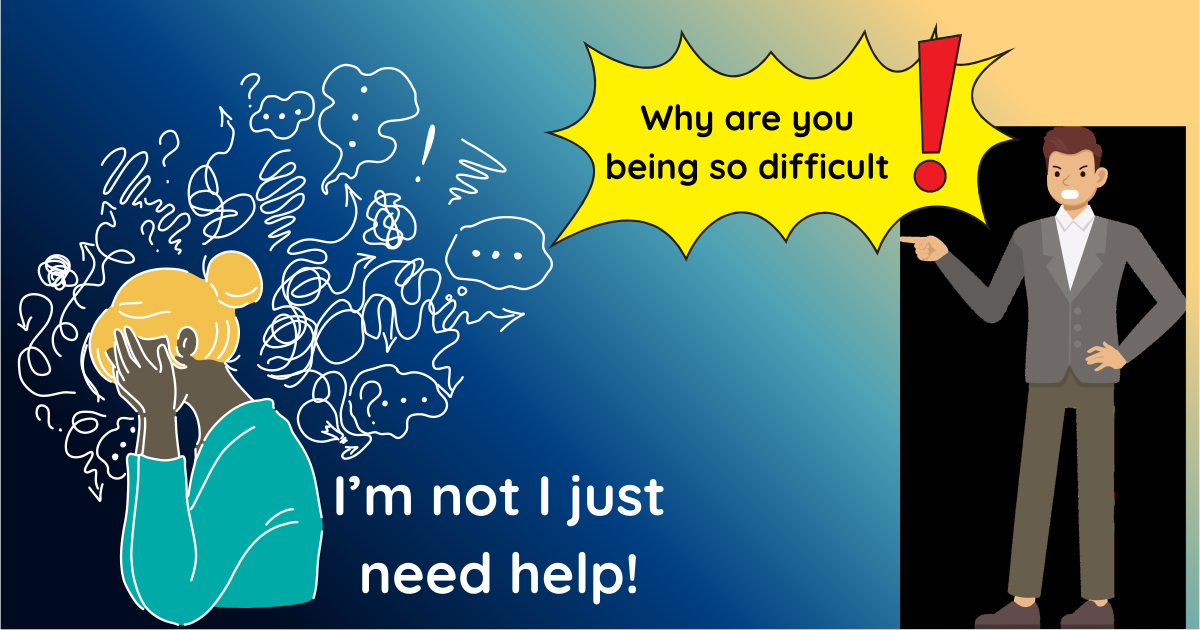
Workplace gaslighting is rarely dramatic or obvious. It often appears through subtle responses that slowly undermine someone’s confidence in their own experience.
Employees may hear statements such as:
-
“That’s not what happened.”
-
“You’re misunderstanding the situation.”
-
“You’re being too sensitive.”
-
“No one else sees it that way.”
-
“You’re remembering it incorrectly.”
Individually, these reactions may seem like typical push-back. These reactions, especially when someone claims to be harmed, can collectively form patterns that undermine the truth.
The initial concern is erased, and the discussion now revolves around trusting the employee’s recall, perception, or emotional reaction.
Why Gaslighting Is a Powerful Control Tactic
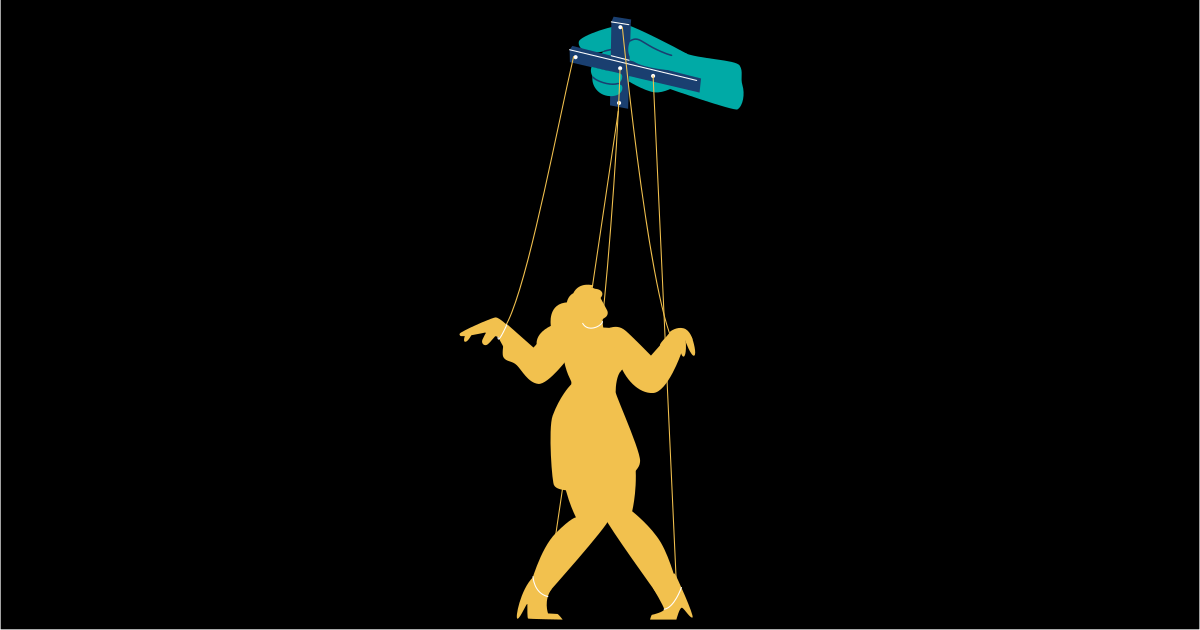
Gaslighting works because it targets one of the most fundamental psychological anchors people rely on: trust in their own perception.
When someone’s experience is repeatedly denied or reframed, they may begin to question themselves:
-
Did I misunderstand what happened?
-
Am I overreacting?
-
Maybe I shouldn’t have said anything.
Cumulatively, this causes moral distress and cognitive dissonance when someone feels they cannot connect their experience to the story that is being told around them.
That kind of pressure can really take a toll on people's mental well-being at work, often resulting in moral injury, a sense of damage when you're forced to look the other way.
The Connection Between Gaslighting and Workplace Power
Gaslighting often thrives in environments where there is a strong imbalance of power.
When authority figures control performance reviews, promotions, schedules, or job security, employees may feel that challenging a distorted narrative is too risky.
Instead of continuing to raise concerns, many people withdraw or remain silent.
This silence can make the gaslighting appear successful. If no one challenges the rewritten narrative, the original issue slowly disappears from view.
But the psychological impact remains.
Employees who experience workplace gaslighting frequently report:
-
loss of trust in leadership or organizational systems
-
anxiety and chronic stress
-
difficulty concentrating or sleeping
-
frustration, anger, or self-doubt
-
questioning their professional identity or sense of purpose
These reactions are not signs of personal weakness. They are common responses to environments where reality itself becomes questioned.
Why Naming Gaslighting Matters
Many harmful workplace behaviours are often dismissed as personality conflicts, misunderstandings, or “office politics.”
But when patterns of gaslighting in the workplace repeatedly deny or distort legitimate concerns, the issue moves beyond ordinary disagreement.
Naming the pattern helps bring the conversation back to a simple but important question:
What actually happened?
When organizations are willing to examine that question honestly, they create the conditions for accountability, psychological safety, and ethical leadership.
When they avoid the question, the cycle of silence and doubt continues.
Part of a Larger Pattern
Gaslighting rarely operates alone. It often appears alongside other workplace behaviors explored in this series.
As readers continue to read more in this series, these patterns can create environments where employees feel pressured to question their own experiences rather than challenge harmful systems.
Understanding gaslighting in the workplace is an important step toward recognizing how psychological manipulation can shape workplace culture.
And once people can name the pattern, it becomes much harder for reality to be rewritten.